Table of Contents
I’ve run this cultivar indoors through multiple cycles and kept notes the whole way: how it stretches after the flip, what it likes in feed strength, and what keeps the citrus terps intact in the jar. When I talk about the 24k Gold strain, I’m talking about the real-world version that shows up in tents and greenhouses, not a perfect photo.
This is not medical or legal advice. Cannabis, marijuana, and weed can affect people differently depending on tolerance, dose, and how the flower was grown and finished.
Genetics and phenotype variation
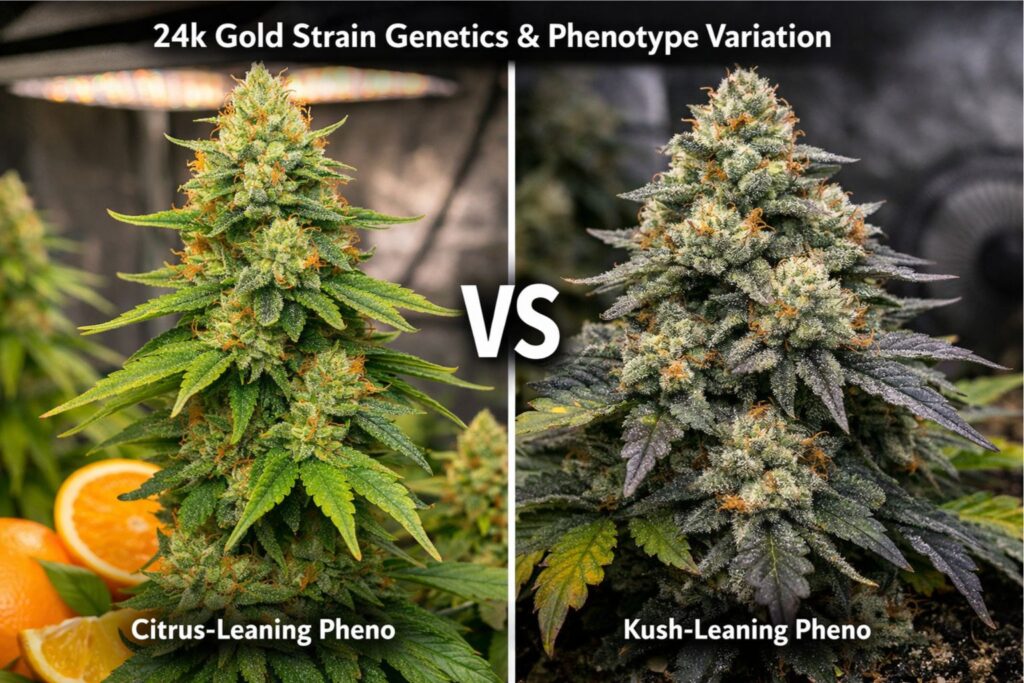
Most versions I’ve seen trace back to Tangie crossed with Kosher Kush. In practice, 24k Gold strain genetics usually show two “lanes” in a pack, even when the plants are started and grown side-by-side under the same light and feed.
- One lane leans loud and bright: citrus-leaning plants that stretch a bit more after the flip and absolutely reek of orange peel in late flower, especially when you brush the sugar leaves or open the tent right before lights-on.
- The other lane leans heavier and denser: kush-leaning plants that stack tighter, finish with chunkier colas, and carry more spice and earth in both the room smell and the cured jar.
Those differences matter because they change how you manage the canopy and how you time the finish. The citrus-leaning phenos often want a little more support and a bit more training to keep tops even, while the kush-leaning phenos can pack on weight fast and need extra airflow through the mid-canopy to avoid humidity pockets.
I also don’t assume they’ll ripen the same week: in a mixed run, I’ve had the bright citrus plant fade and hit peak aroma earlier, while the heavier plant kept swelling and needed a few more days to fully mature. If you’re trying to dial in repeatable results, label each plant early, keep notes on stretch and scent development, and be ready to harvest by phenotype rather than forcing everything to come down at once.
Aroma and taste
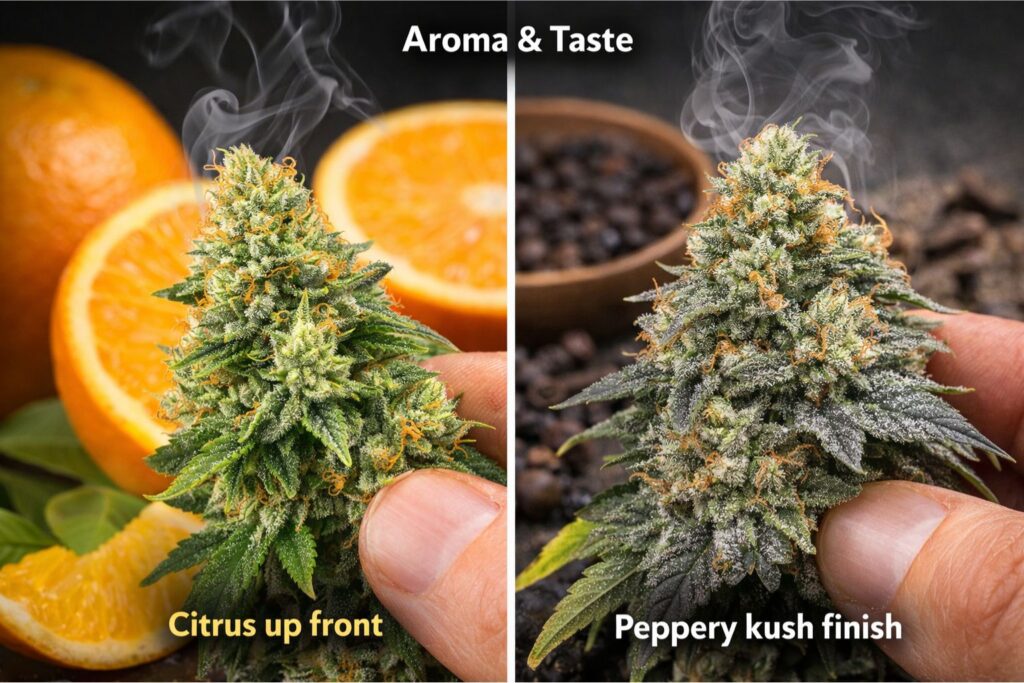
When it’s grown clean and finished slowly, the 24k Gold strain flavor is what people remember: bright citrus up front with a peppery, kushy back note. If you rush drying or push salts hard late in bloom, the citrus flattens and the smoke gets rough.
What I do to protect 24k Gold strain flavor:
- Keep the root zone stable and avoid big swings in moisture
- Back off feed late rather than “chasing bulk”
- Dry slowly at cool temps, then cure long enough for the sharp edges to settle
The second thing I notice is how the flavor shifts with phenotype. Some jars stay orange-forward; others lean more savory and spicy.
Effects: my personal, non-medical notes
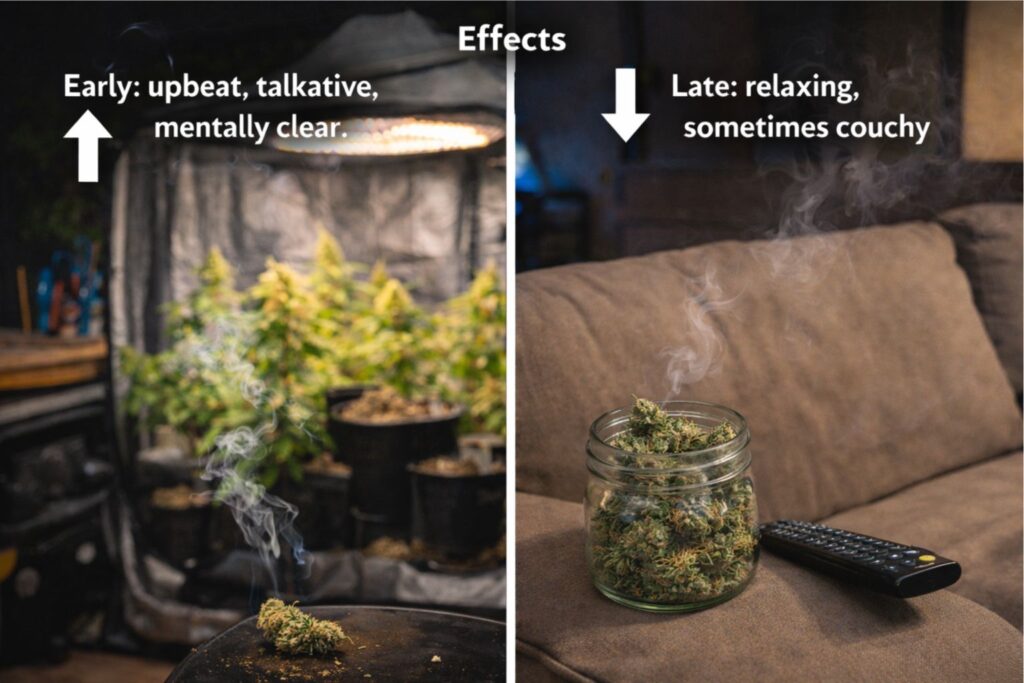
The 24k Gold strain effects for me are usually a two-step: a brighter, more social headspace first, followed by a calmer body tone that settles in as the session goes on. In the first 20–40 minutes, I tend to feel more talkative and “up,” with a clear, positive lift that makes it easier to stay engaged in conversation or knock out simple tasks around the grow room. After that initial rise, the experience shifts toward a more grounded, physical calm, like the body is catching up to the mind. It’s not an instant couch-lock for me at sensible amounts, but it can become very mellow if I overdo it.
I’m careful with dose because potent marijuana can turn sedating at higher amounts, and I’ve noticed harvest timing changes the balance. When I take plants a bit later and let them fully ripen, the body effect tends to come on heavier and sooner, and the “bright” phase feels shorter. Earlier harvests usually keep the headspace more energetic and the finish less sleepy. Individual tolerance matters a lot too, so I treat this as a flexible strain: great when I want a lift that doesn’t stay edgy, but one I respect by starting low and waiting before taking a second round.
My typical notes on 24k Gold strain effects:
- Early: upbeat, talkative, mentally clear
- Middle: stress feels lighter, body loosens
- Late: relaxing, sometimes couchy if I overdo it
If you’re sensitive to strong weed, start low and give it time before taking more.
My indoor cultivation numbers
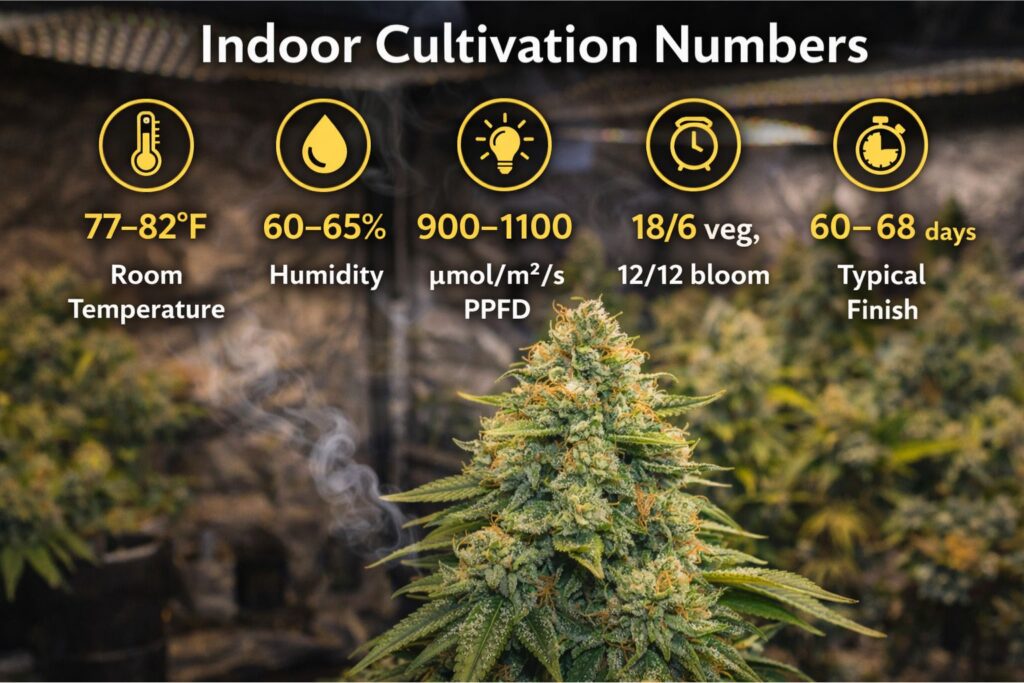
I’ve grown this in living soil and in coco, but most testing happened in an indoor tent with LEDs. A dependable indoor cannabis grow setup matters more than any single “secret” technique.
Light intensity and schedules
I veg at 18/6 and flower at 12/12. Here are the LED PPFD targets that have been repeatable for me without bleaching or stalling:
- Veg canopy: 300–500 PPFD
- Early flower: 600–750 PPFD
- Mid to late flower: 750–900 PPFD if climate control is stable
If your room runs hot or dry, treat these LED PPFD targets as a ceiling, not a requirement. Light intensity only helps when the plant can actually transpire and feed efficiently, and in a stressed environment higher PPFD can push you into problems fast. Instead of chasing a number, increase in small steps (I like 5–10% at a time) and give the plants a full day or two to show you how they’re responding.
Watch leaf posture and drinking speed like they’re your dashboard gauges. Leaves that “pray” slightly upward with firm petioles usually mean the plant is comfortable, while curling edges, tacoing, or a dull, droopy look can mean the light is too intense for your current heat and humidity. Drinking speed tells the same story: if pots are drying at a healthy rhythm and the plant stays perky from lights-on to lights-off, you’re in a workable range.
If uptake slows, runoff EC starts climbing, or you see tip burn creeping in after a PPFD bump, back the light down and stabilize the environment first. In my experience, it’s better to run slightly lower PPFD with tight climate control than to blast the canopy and fight stress the whole run.
Temperature, humidity, and VPD
Instead of guessing, I keep a VPD chart for flowering next to my controller. In flower I aim for conditions that keep transpiration steady and reduce moisture risk inside the buds.
My typical bands:
- Veg: 24–28°C with 60–70% RH
- Flower: 23–27°C with 45–55% RH
Using a VPD chart for flowering helps me stay around roughly 1.1–1.4 kPa most days. If you’ve ever battled mold, you’ll appreciate how much a VPD chart for flowering improves consistency.
Airflow and canopy hygiene
A basic indoor cannabis grow setup should move air above and below the canopy, because airflow is what keeps temperature, humidity, and leaf surfaces from getting “pockety.” I run one oscillating fan under the tops and one above, and I aim them so the leaves gently flutter rather than get blasted. Under-canopy movement matters just as much as the top fan, especially once the plants fill in and the lower zone becomes shaded and humid. That lower area is where moisture likes to sit, and it’s also where pests and mildew can get a foothold if you ignore it.
I also treat canopy hygiene as part of airflow management. I clean out dead leaves weekly and thin out crowded interior growth when it starts blocking circulation, because a fan can’t fix a canopy that’s packed too tight. Dense flowers plus stagnant air is how problems start, particularly late in bloom when buds are bulky and the plant’s transpiration pattern changes. If I notice humidity spikes right after lights-off, I’ll increase exhaust a notch, make sure the under-canopy fan isn’t obstructed, and remove a few shaded leaves to open channels for air to move through. It’s simple, but it prevents most of the “mystery” issues growers blame on genetics.
Feeding strategy (coco and beyond)
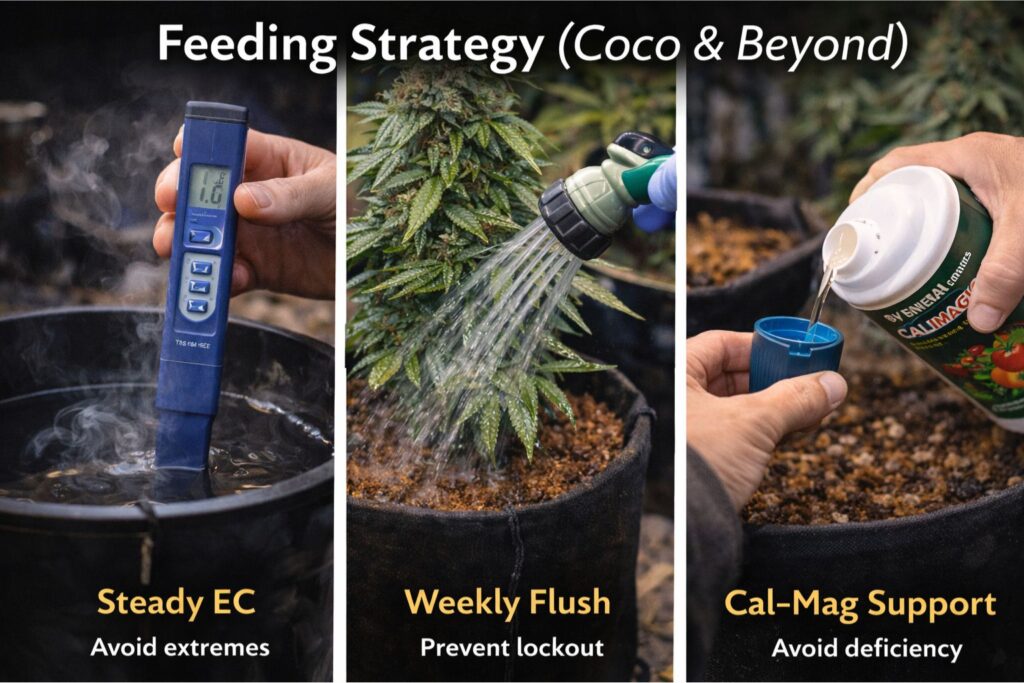
In coco, I water frequently with runoff once the roots are established. The simplest way I can explain my coco nutrient schedule is: conservative early, steady mid-flower, and calmer late so flavor stays clean.
A starting point that works in many rooms:
- Veg: EC 1.2–1.6
- Early flower: EC 1.6–1.9
- Mid flower: EC 1.8–2.2
- Late flower: EC 1.6–1.9
That coco nutrient schedule is a framework, not a promise. Watch leaf tips, clawing, and how fast pots dry. If you see burn, reduce strength and let the plant recover before you change anything else. In my runs, an even coco nutrient schedule is the fastest route to better smoke.
Training for an even canopy
This cultivar responds well to topping and branch spreading. I use plant training for yield mainly to keep the canopy flat so my light intensity is consistent across tops.
My basic plant training for yield routine:
- Top once after the 5th node
- Tie branches outward early to open the center
- Remove the lower third before week 2 of flower
- Light defoliation around day 21 if airflow is restricted
If you do plant training for yield correctly, you’ll get fewer tiny lower flowers and more uniform ripening.
Flowering time and harvest cues
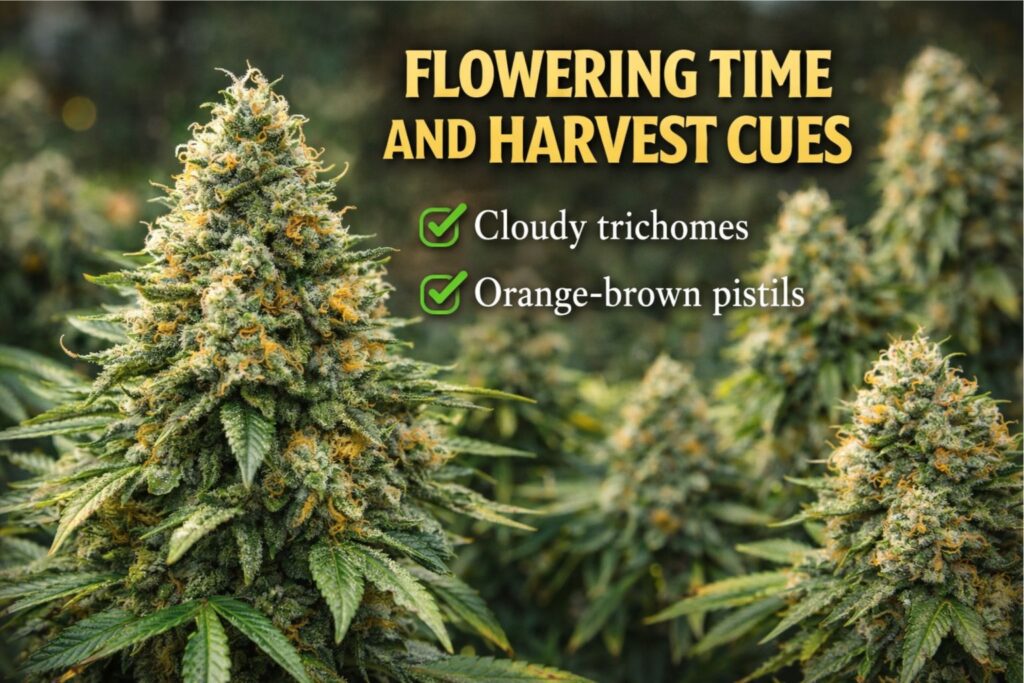
Most plants land in the 60–70 day window, but I don’t harvest by the calendar. I check trichomes on the calyx heads and watch how the aroma develops. Earlier harvests tend to keep a brighter, more energetic profile; later harvests push heavier relaxation.
Drying and curing: the part most reviews skip

I’ve ruined good weed by drying too fast, so I’m strict about this. My dry and cure protocol is built around slow moisture loss and stable conditions.
My dry and cure protocol:
- Dry at 18–20°C
- Hold 55–60% RH in the drying space
- Use steady, indirect airflow (no fans blasting buds)
- Jar at 58–62% and burp regularly early on
A consistent dry and cure protocol keeps the citrus intact and reduces harshness. If your jars smell grassy, your dry was probably too warm or too fast.
Pest prevention in plain language
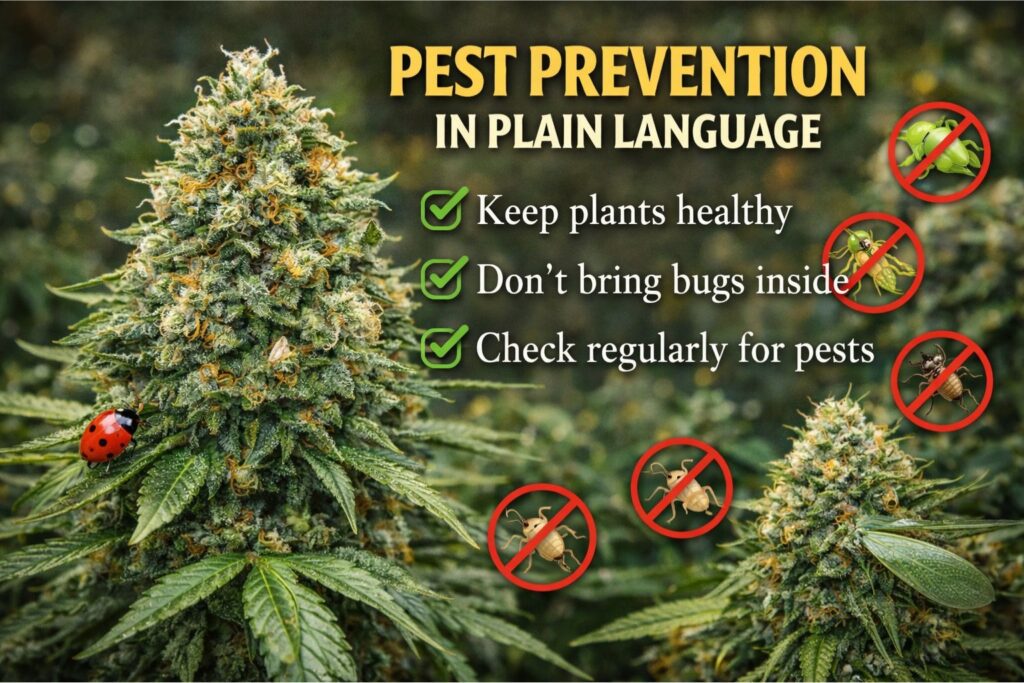
My approach is boring on purpose:
- Sticky traps in every space
- Weekly underside leaf checks with a loupe
- Clean floors and no standing water
- Quarantine new plants when possible
Once buds are forming, most “fixes” risk residue or damaged terps. Prevention beats panic spraying.
Seed-shopping and realistic expectations
Even if you’re experienced, cannabis seed ordering is where expectations can get weird. The same label can produce different phenotypes, so I buy with that in mind. I look for clear product descriptions, storage standards, and tracking.
Practical cannabis seed ordering tips:
- Choose a seller that explains the cultivar’s background and how seeds are stored
- Expect variability and plan to keep notes on each plant
- Store seeds cool, dry, and dark once they arrive
People also ask about feminized seeds compared with regular seeds, and auto-style vs photoperiod. For most home growers, feminized photoperiod seeds are the simplest path to control and consistency, but choose what fits your schedule and skill level.
FAQ
What are the 24k Gold strain effects like for most people?
I can only speak to my notes and what friends report. For me, 24k Gold strain effects start upbeat and settle into relaxation. Harvest timing and dose make a big difference.
How would you describe 24k Gold strain flavor in the jar?
When it’s dried slowly and cured patiently, the 24k Gold strain flavor is citrus-forward with a spicy kush finish. If you want the best 24k Gold strain flavor, don’t rush the finish.
What should I know about 24k Gold strain genetics before I start?
24k Gold strain genetics often split between citrus-leaning and kush-leaning phenotypes. Label plants, track finish times, and keep cuttings if your region and setup allow.
What LED PPFD targets should I use with LEDs?
My LED PPFD targets are 300–500 in veg, 600–750 early flower, and up to 900 later if the environment is stable. Treat those LED PPFD targets as adjustable based on heat, humidity, and plant response.
Do I need a VPD chart for flowering?
You don’t need one, but it helps you keep conditions stable. I use a VPD chart for flowering to avoid moisture spikes and to keep transpiration steady.
What coco nutrient schedule would you start with?
My coco nutrient schedule stays conservative: 1.2–1.6 EC in veg, 1.6–1.9 early flower, 1.8–2.2 mid flower, then 1.6–1.9 late. Use that coco nutrient schedule as a starting framework and adjust to your water.
What plant training for yield works best here?
Topping once, spreading branches, cleaning the lower third, and light defoliation has been the most repeatable plant training for yield method in my tents.
What dry and cure protocol do you recommend?
A slow dry at cool temps and stable humidity is key. My dry and cure protocol is 18–20°C, 55–60% RH, indirect airflow, and a patient cure at 58–62% in jars.
Any final cannabis seed ordering advice?
Keep expectations realistic. Cannabis seed ordering goes better when you plan for phenotype variation and track what each plant actually does in your room.
For a complete directory of cultivars, visit our Cannabis Strain Reviews.
