Table of Contents
I’m publishing this 13 Dawgs strain review the same way I judge any cultivar in my own garden: by what it does under real conditions. I focus on the fundamentals—stable environment, consistent feeding, clean airflow, and careful timing—then I let the plant’s growth, leaf posture, and aroma guide the fine-tuning. If you’re researching the 13 Dawgs strain before you dedicate a corner of your tent (or before you buy cannabis seeds online), my goal is to give you the kind of practical, grow-first notes I always look for when I’m deciding what to run next.
One important reality check up front: “13 Dawgs” isn’t always a single, identical expression across the market. It can vary by breeder, by seed line, and even by batch. Even when a product listing calls it a G13 x Chemdawg cross, you can still see noticeable phenotype variation—some plants lean heavier, earthier, and more sedating, while others come out sharper, more energetic, and more head-forward. That’s normal for a hybrid cannabis strain, and it’s exactly why I recommend planning your run with a little flexibility: be ready to adjust training, humidity control, and harvest timing based on the specific plant you’re growing, not just the description you read online.
13 Dawgs Strain Basics at a Glance
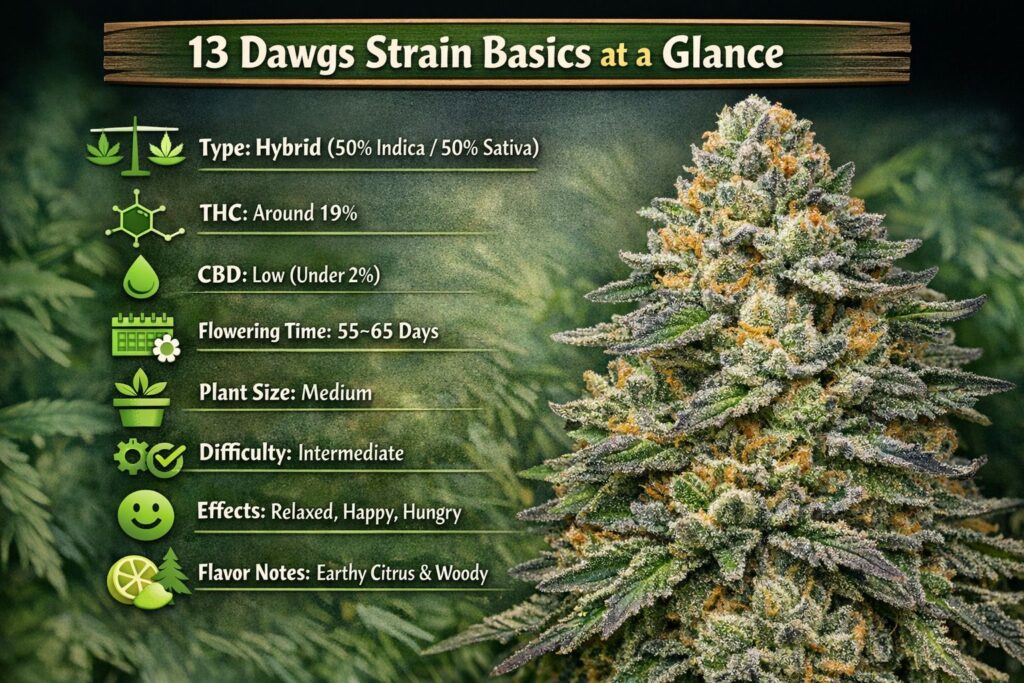
Here’s how I summarize the 13 Dawgs strain for planning purposes:
- Type: hybrid cannabis strain (often described as 50/50)
- THC: commonly listed around 19% (expect batch variation)
- CBD: commonly listed as low (often under 2%)
- Flowering time: typically 55–65 days indoors
- Plant size: medium in most indoor grow setups
- Difficulty: intermediate (mainly due to feeding and odor control)
- Top reported effects: relaxed, happy, hungry (subjective and dose-dependent)
- Common flavor notes: earthy citrus flavor with woody and herbal edges
If you’re shopping 13 Dawgs seeds, treat any “exact percentages” as rough guidance, not a guarantee.
Genetics: Where the 13 Dawgs Strain Usually Comes From
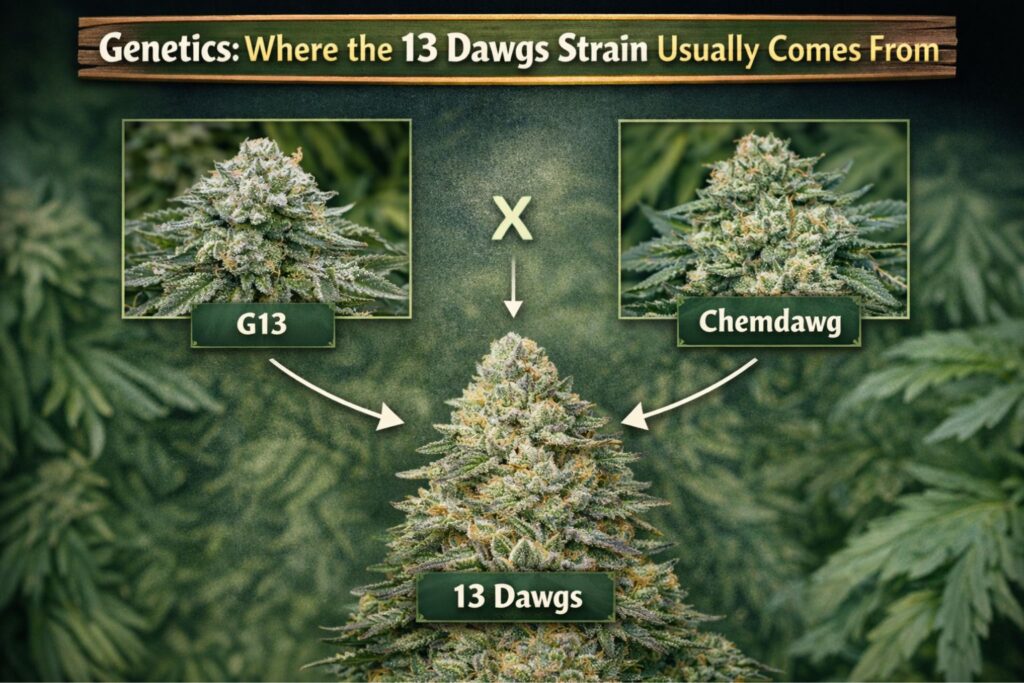
Most descriptions trace the 13 Dawgs strain back to G13 and Chemdawg. That pairing makes sense from a grower’s perspective:
- G13 is often associated with heavy body relaxation and a classic, deep “old-school” weed presence.
- Chemdawg is famous in cannabis circles for loud aroma, fuel/chemical funk, and a punchier head effect.
In my runs, the most recognizable thread is the Chemdawg side showing up in early vigor and overall aroma intensity—faster branching, a bit more stretch when the lights flip, and a noticeably louder smell as flower sets in. The G13 influence, on the other hand, tends to show later: tighter, denser buds, heavier resin in the final weeks, and an effect that can feel more body-forward when harvested at full maturity. That said, the balance can swing either direction depending on the exact 13 Dawgs seeds you’re working with, the phenotype you land on, and even how you run the environment (heat, light intensity, and dry/cure timing can all nudge what stands out most).
What the Buds Look Like When You Grow It Well
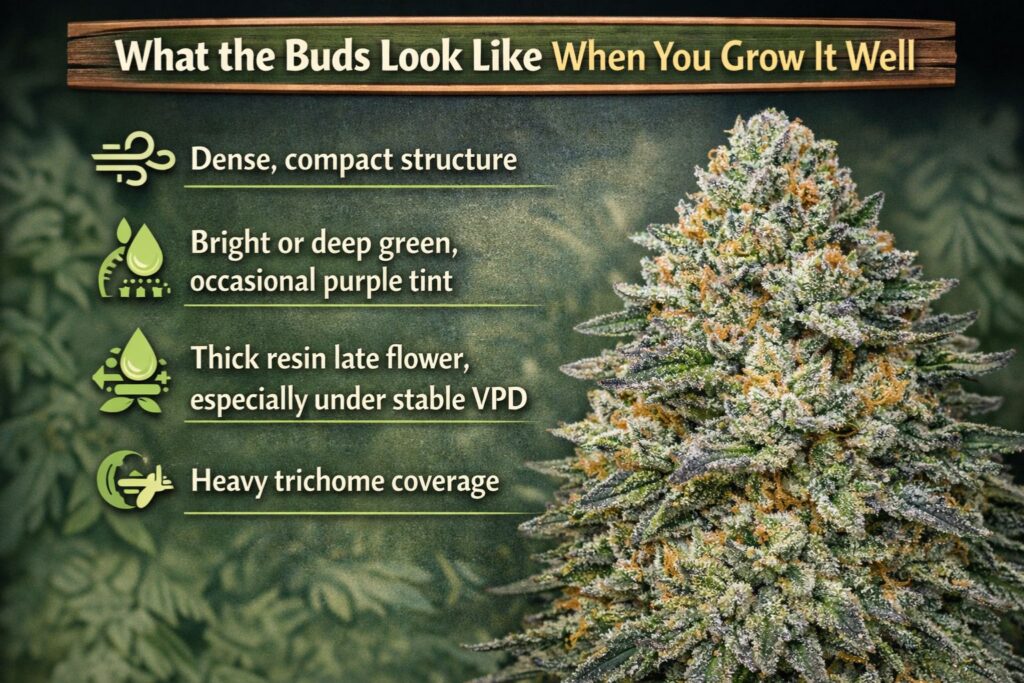
When the 13 Dawgs strain is happy, the buds tend to form tight, chunky clusters with strong trichome coverage. On a good dry-down, I’ve seen:
- Dense, compact flower structure (watch airflow to prevent moisture pockets)
- Bright-to-deep green with occasional purple tint late flower (often temperature-influenced)
- Thick resin in the final 2–3 weeks, especially when VPD is stable
If your indoor grow environment runs humid, don’t let dense colas convince you everything is fine. With a hybrid cannabis strain that stacks this way, airflow and dehumidification matter more than most new growers expect.
Aroma and Terpene Profile: What I Smell Before I Ever Smoke It
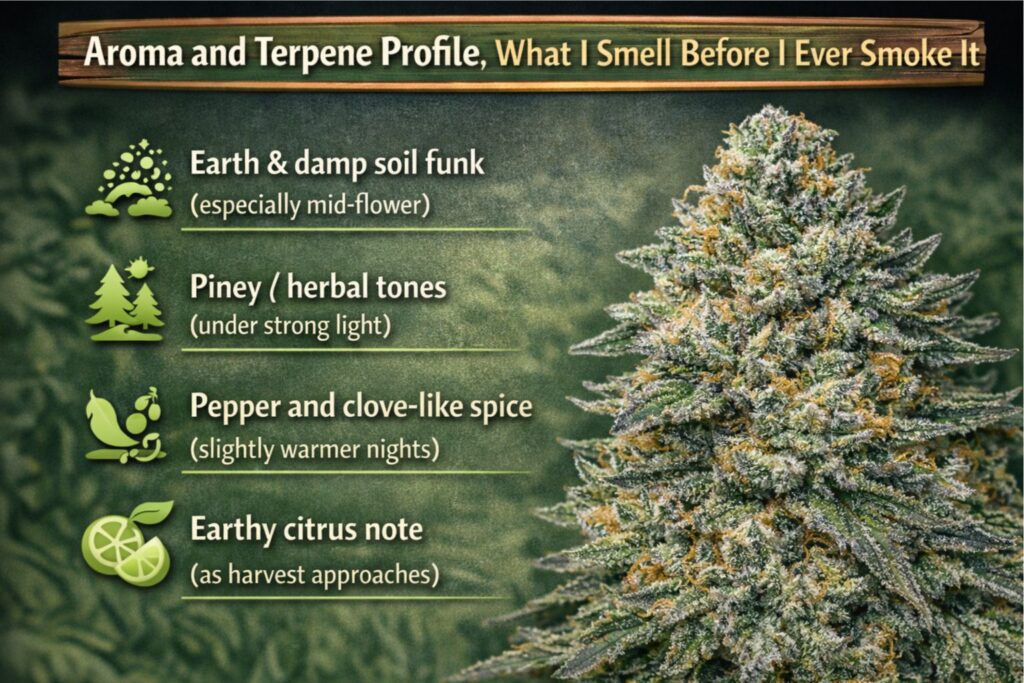
The 13 Dawgs strain tends to announce itself early. In flower, I get a layered terpene profile that shifts depending on phenotype and ripeness.
Common notes I’ve personally picked up:
- Earth and damp-soil funk (especially mid-flower)
- Piney/herbal tones when the canopy is under strong light
- A spice edge (pepper/clove-like) when I run slightly warmer nights
- A brighter top note that reads as earthy citrus flavor as harvest approaches
When I crack a properly cured nug, the terpene profile usually gets louder and more layered right away. The subtle “sweet” side comes up first, then the woody-herbal notes sharpen into something clearer—more like dried herbs and foresty pine than raw plant material. I also notice the aroma hangs in the air longer after cure, instead of flashing off quickly like it can when buds are still a bit green or rushed. If you’re into complex marijuana aromatics with depth and shifting notes, rather than candy-forward “dessert” weed, the 13 Dawgs strain is a strong fit.
Flavor: Earthy, Woody, With an Earthy Citrus Flavor Finish
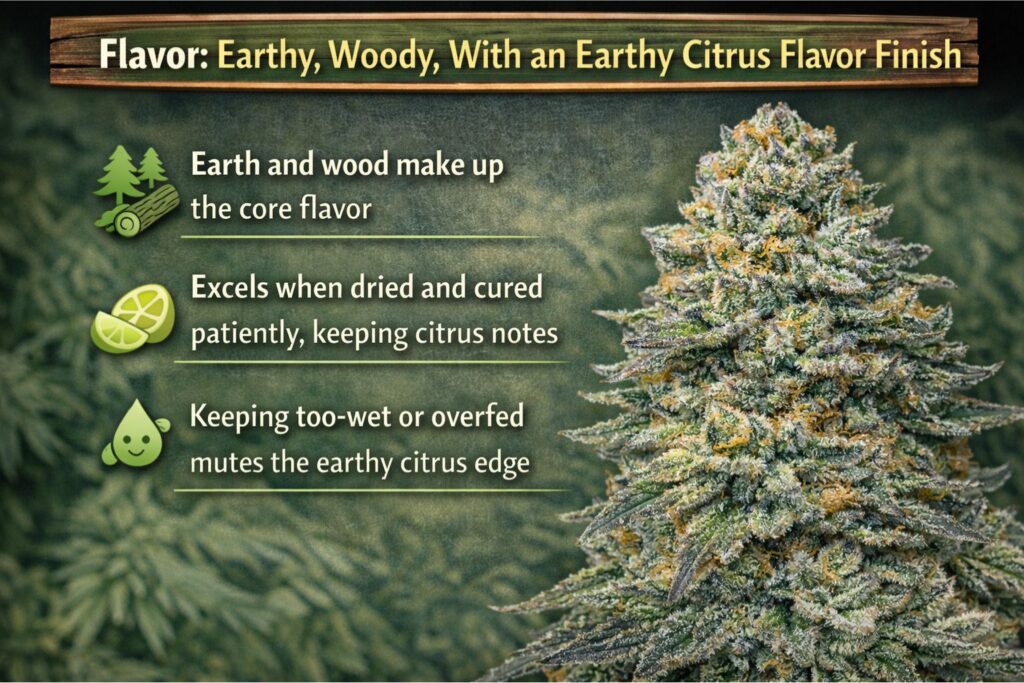
On the palate, the 13 Dawgs strain leans grounded and “natural” rather than sweet or candy-like. To me, the core comes through as earthy and woody on the inhale, almost like dry soil and fresh-cut wood, and then the earthy citrus flavor shows up more clearly on the exhale as a brighter, slightly tangy finish. When the flower is properly dried and cured, that citrus edge feels cleaner and more defined; if it’s rushed or overfed late, the same profile can flatten into mostly earth and wood with the citrus note barely peeking through.
A few practical notes that change flavor a lot:
- Overfeeding late flower can mute the earthy citrus flavor and make the smoke harsher.
- Too-wet drying can trap chlorophyll and flatten the terpene profile.
- A steady cure (not rushed) is what turns “good weed” into “repeatable weed.”
If you want the best representation of this hybrid cannabis strain, drying and curing are not optional details—they’re half the final result.
Effects: What to Expect From the 13 Dawgs Strain (No Hype)
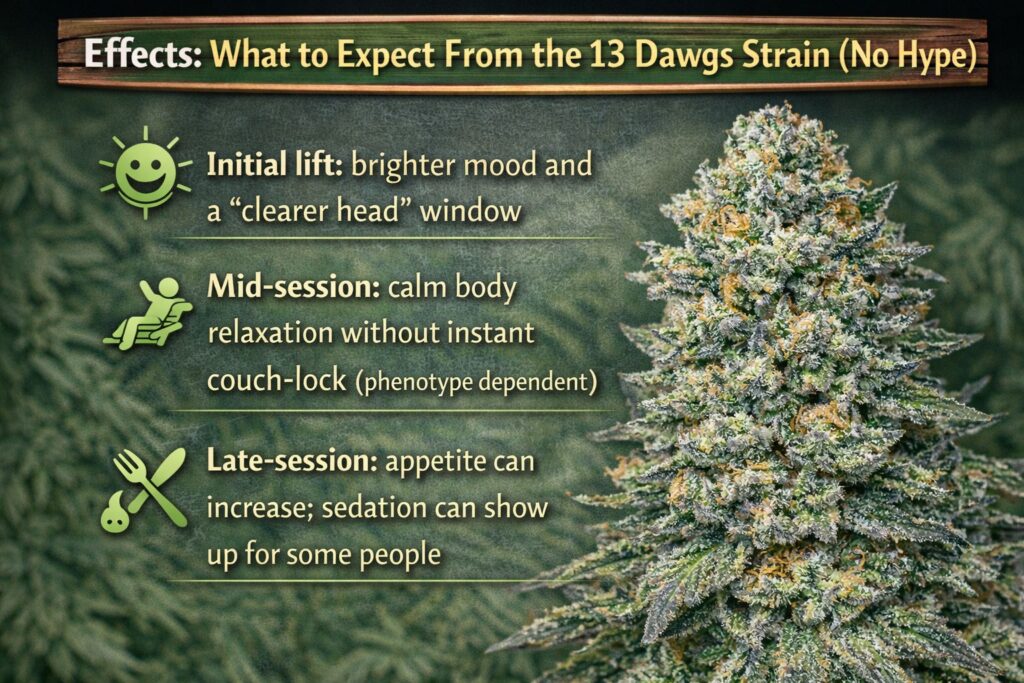
Effects vary, and they vary a lot with dosage, tolerance, and phenotype. In my experience, the 13 Dawgs strain usually lands in a balanced zone where the head and body meet in the middle. At moderate doses, I tend to feel an initial lift in mood and a clearer, more upbeat mindset, followed by a steady physical calm that eases tension without immediately shutting me down. If I push the dose higher—or if I’m on a heavier-leaning phenotype—the same profile can tip into a stronger body effect with more appetite and a noticeably slower, sleepier finish.
- Initial lift: a brighter mood and a “clearer head” window
- Mid-session: calm body relaxation without instant couch-lock (phenotype dependent)
- Late-session: appetite can increase; sedation can show up for some people
Some consumers associate this kind of cannabis with stress relief or sleep support, but I don’t treat that as a promise or a health claim. If you’re using marijuana for any medical purpose, talk to a qualified clinician and follow local guidance. For most people, the best use-case is simple: moderate doses when you want a calmer day, and careful timing if you’re sensitive to sleepy finishes.
How I Run an Indoor Grow for 13 Dawgs
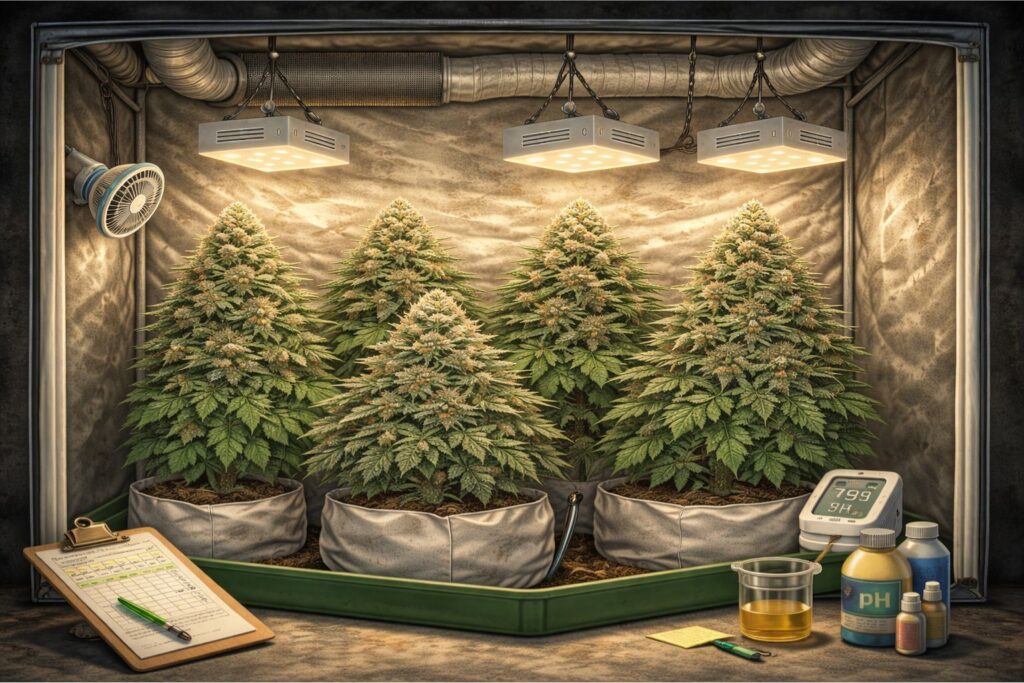
If you’re planning an indoor grow for the 13 Dawgs strain, I’d treat it like a moderately hungry hybrid cannabis strain that rewards stable environment more than aggressive feeding.
Environment Targets (PPFD, VPD, Temp, RH)
These are the ranges I aim for (not rigid rules):
Vegetative stage:
- Photoperiod: 18/6
- PPFD: 300–600
- Temp: 24–28°C lights on, 20–24°C lights off
- RH: 55–70%
- VPD: roughly 0.8–1.2 kPa
Flowering stage:
- Photoperiod: 12/12
- PPFD: 700–900 (higher only if CO2 and environment are truly dialed)
- Temp: 23–27°C lights on, 19–23°C lights off
- RH: 40–55% (lower late flower if buds are very dense)
- VPD: roughly 1.2–1.6 kPa
A stable indoor grow beats a “perfect chart” every time. When the tent swings hot/humid, I see looser structure and more risk near harvest, especially during the flowering time window when colas bulk up.
Medium: Soil vs Hydro (What I’ve Learned)
I’ve run the 13 Dawgs strain in both soil and hydro-style feeding, and it behaves a little differently depending on the medium. In soil, it’s more forgiving if you’re still dialing in watering habits or you miss a feed—growth is steadier and the plant tends to “buffer” small mistakes. In hydro-style setups (especially coco), the response is faster in both directions: you’ll see quicker vigor and tighter control over growth, but you’ll also see issues sooner if EC swings, pH drifts, or irrigation timing isn’t consistent.
- Soil: more forgiving, better buffer against mistakes, great for growers learning to read leaf posture and color.
- Hydro/coco: faster growth and tighter control, but you must stay consistent or you’ll see issues quickly.
If you’re new, I’d rather see you grow 13 Dawgs seeds in a quality soil mix than chase peak numbers in a complicated system. Healthy roots make everything easier.
Feeding and EC Targets (Avoiding Burn and Deficiencies)
For an intermediate feeder like this, my approach is steady and measured:
- Early veg EC: 0.8–1.2 (400–600 ppm on 500 scale)
- Late veg EC: 1.2–1.6 (600–800 ppm)
- Early flower EC: 1.6–1.9 (800–950 ppm)
- Mid flower EC: 1.8–2.2 (900–1100 ppm) depending on cultivar response
- Late flower: I taper if leaf tips show stress and keep irrigation consistent
Common mistake: pushing EC because the plant “looks hungry,” when the real issue is VPD, root zone oxygen, or uneven watering. With this hybrid cannabis strain, I’d rather underfeed slightly than chase maximum feed and lose terpene profile quality.
Training: How I Shape the Canopy
In an indoor grow, I like to manage height and light distribution:
- Top once or twice in veg, then spread with low-stress training
- Use a trellis net if you expect heavy colas late flowering time
- Defoliate lightly and strategically: open airflow, don’t strip the plant bare
This keeps the 13 Dawgs strain from shading itself, and it reduces the risk of humidity pockets deep in the canopy.
IPM: Pest and Mold Prevention That Actually Works
Dense buds + a long-ish flowering time is exactly why I keep IPM simple and consistent:
- Keep the grow room clean (floor, intake filters, tools)
- Inspect leaf undersides weekly in veg and early flower
- Avoid overwatering and avoid stagnant air
- Maintain strong circulation and control RH late flower
If you smell musty notes that don’t match the terpene profile, investigate immediately. Don’t wait for harvest week to “hope it’s fine.”
Flowering Time, Harvest Timing, and Yield Notes
Most listings put the flowering time for the 13 Dawgs strain around 55–65 days, and that lines up well with what I’ve seen in my indoor runs. I usually plan for the full window because different phenotypes can finish at different speeds, even from the same pack of seeds. In my tent, the plants that stack denser buds and push heavier resin often want those extra days to fully ripen, while faster finishers can look “done” earlier but still improve noticeably if I give them a little more time to mature.
How I decide harvest timing:
- I watch trichomes, but I also watch overall plant behavior (fade, water uptake, aroma shift)
- Many phenotypes peak in aroma just before they look “fully done”
- If I harvest too early, the earthy citrus flavor is thinner and the effect can feel more jittery
Yield depends on phenotype, training, and environment. With a well-run indoor grow, I’d call it a solid producer, not a freak yielder. The real win is quality: dense buds, strong aroma, and a terpene profile that holds up after cure.
Drying and Curing: Where Most Strain Reviews Go Wrong
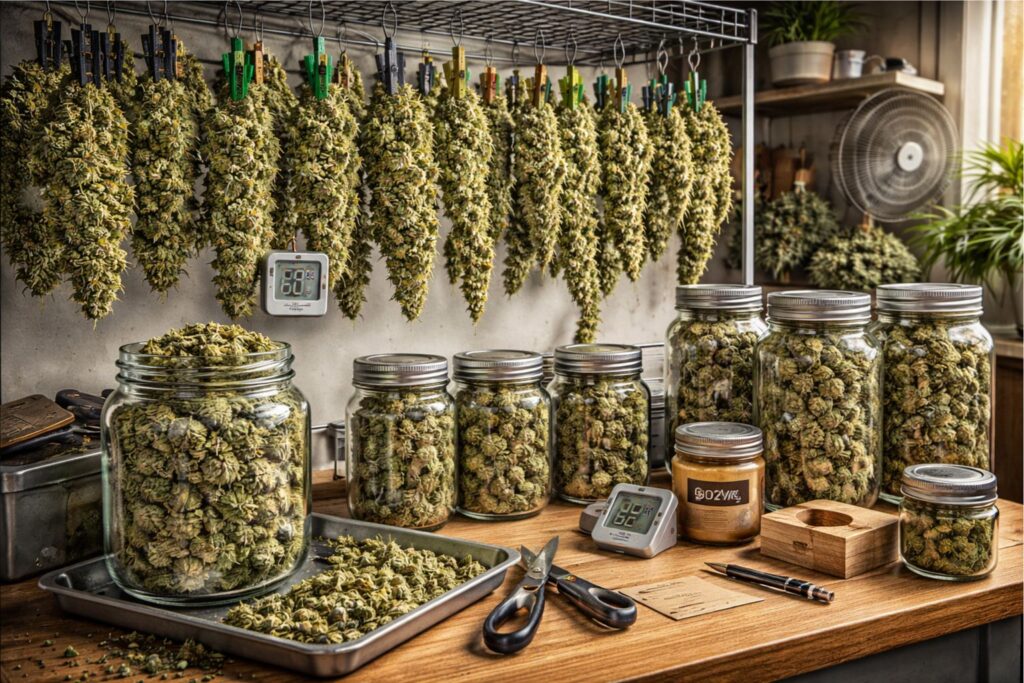
If you want your 13 Dawgs strain to taste like it smells, drying and curing are the make-or-break step.
My basic workflow:
- Dry at roughly 18–20°C and 55–60% RH when possible
- Keep airflow indirect (don’t blast buds with a fan)
- Aim for a slow dry (often 7–14 days depending on conditions)
- Jar and cure with regular burping early on, then reduce as moisture stabilizes
This is where the earthy citrus flavor becomes clearer, and where harshness drops off. A patient cure also protects the terpene profile that makes this hybrid cannabis strain stand out.
Buying 13 Dawgs Seeds: What I Look For Before I Commit

If you’re looking for 13 Dawgs seeds, the biggest tip I can give is to focus on breeder transparency and consistency, not just a flashy description.
What I check:
- Whether the seller clearly states feminized seeds or regular seeds
- Any notes on phenotype range (some lines swing heavier or more energetic)
- Expected flowering time and plant structure (to plan your indoor grow)
- Shipping policies and customer support if you plan to buy cannabis seeds online
Also, laws vary widely by region. If you buy cannabis seeds online, do your own research on your local grow laws and seed import rules. This isn’t legal advice—just the reality that cannabis and marijuana regulations change from place to place.
FAQ: Long-Tail Questions People Ask About the 13 Dawgs Strain
Is the 13 Dawgs strain indica or sativa?
Most versions are sold as a hybrid cannabis strain, often close to 50/50. Some phenotypes lean more relaxing (indica-leaning), while others lean more uplifting. Your 13 Dawgs seeds and how you grow them will influence the final expression.
What is the flowering time for the 13 Dawgs strain?
In an indoor grow, flowering time is commonly 55–65 days. I plan for the full window because late-flower ripening is where aroma and terpene profile usually peak.
What does the 13 Dawgs strain taste like?
Expect an earthy base with wood and herbs, plus an earthy citrus flavor that often comes through more after a proper cure. If you rush drying, the earthy citrus flavor can fade and the smoke can feel sharper.
Is 13 Dawgs related to G13 and Chemdawg?
Many descriptions list it as G13 x Chemdawg. That’s the common story behind the 13 Dawgs strain, and it matches the type of structure and aroma intensity I’ve seen, but breeder lines can differ.
Are 13 Dawgs seeds available as feminized seeds?
Sometimes, yes. Always confirm whether you’re buying feminized seeds or regular seeds before checkout. If you’re trying to fill a small tent efficiently, feminized seeds can simplify planning.
Can beginners grow the 13 Dawgs strain indoors?
Beginners can do it, but I consider it intermediate because feeding and humidity control matter during flowering time. If you keep the indoor grow environment stable and don’t overfeed, it’s very manageable.
What should I watch out for when I buy cannabis seeds online?
When you buy cannabis seeds online, focus on clear product details, reputable support, and straightforward shipping information. Also remember: grow laws vary, so check your local rules before ordering 13 Dawgs seeds.
Does the 13 Dawgs strain have a strong smell?
In my grows, yes—especially late flower. The terpene profile can get loud, and carbon filtration is usually needed in an indoor grow if odor is a concern.
How do I preserve the terpene profile after harvest?
Slow drying, steady curing, and avoiding excess heat are the big ones. If you want the earthy citrus flavor to stay pronounced, don’t rush the cure and don’t store buds in warm, bright places.
Should I run soil or hydro for 13 Dawgs?
Both work. Soil is easier for most people; hydro/coco offers tighter control but punishes inconsistency. Either way, stable environment and reasonable EC will do more than chasing extremes.
For a complete directory of cultivars, visit our Cannabis Strain Reviews.
